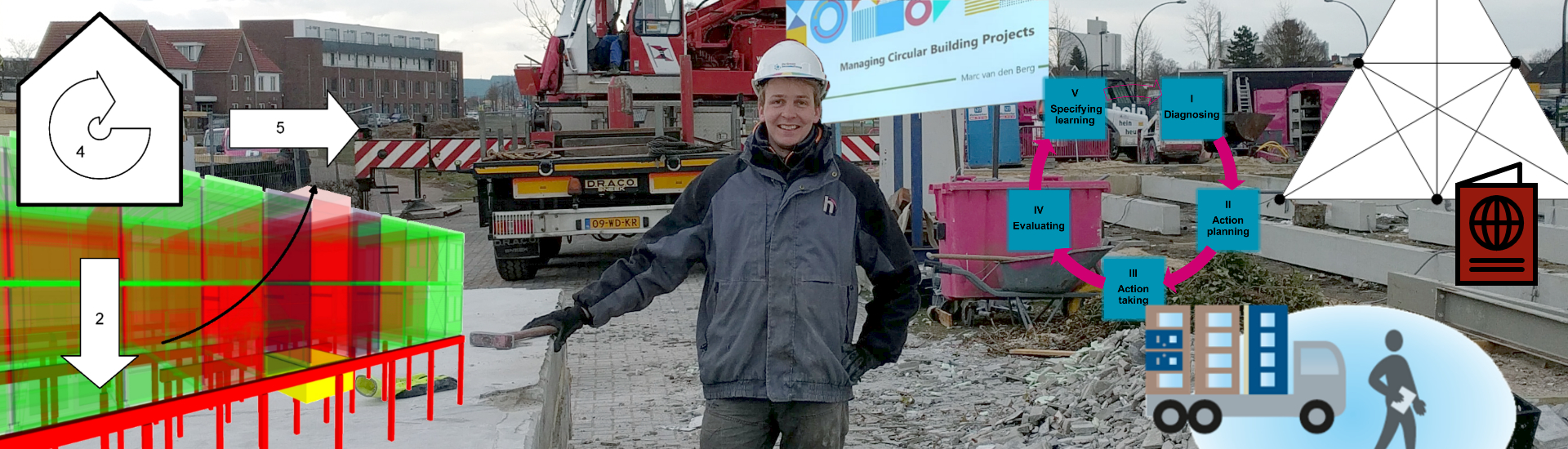
This (Engineering Doctorate) design science research project developed a BIM-based circularity assessment tool. It can use BIM models with varying levels of detail as input to calculate and visualize aspects of circularity (such as the disassemble-ability and types of materials used). This can support ongoing design and decision-making processes in projects. The tool was developed within the contexts of two projects: a renovation and a new-build project. Stakeholders from different disciplines and client representatives collaborated over the course of the project through meetings, interviews and presentations. The output of the study was published in a design report, several academic papers and covered in Aannemer.
Abstract
The construction industry is in the transition from a linear to a circular economy (CE) where economic growth is decoupled from materials extraction. The increasing interest in CE requires construction companies to identify transition strategies, which entails an understanding of their circular performance along with the associated risks and opportunities. Furthermore, the construction industry has witnessed a surge in information-centric approaches, which has encouraged the development of Building Information Modelling (BIM), providing the possibilities for incorporating various analyses. Hereby, with the growing societal relevance of a CE, BIM technologies can be incorporated into CE-driven research, to facilitate the development of circularity assessment methods for monitoring and quantifying the progress toward a CE in a BIM environment.
| Type of project: | Engineering Doctorate |
| Candidate: | Li Jiang |
| Supervisors/advisors: | Hans Voordijk Marc van den Berg Arjen Adriaanse |
| Status: | Completed: 10 May 2023 |
| Funding: | DigiGO UT Campus & Facility Management |
| Research output: | Link |